
In Malaysia, any work connected to Tenaga Nasional Berhad (TNB) infrastructure — substations, transformers, HV cabling, transmission and distribution — is tightly regulated. The contractor you appoint is legally and practically responsible for the safety of the installation and for getting it approved and energised. That makes selection a due-diligence exercise, not just a price comparison. Below is what separates a properly licensed contractor from a risky one.
1. Suruhanjaya Tenaga (Energy Commission) registration
The single most important check is registration with Suruhanjaya Tenaga (ST), Malaysia's Energy Commission. ST licenses electrical contractors and, just as importantly, the competent persons who must supervise the work. Do not accept a company registration alone — confirm the class of licence matches the voltage of your project.
- Chargeman — a registered competent person who supervises and is responsible for an installation. Chargemen carry a voltage endorsement (for example LV, or up to 11kV / 33kV), so confirm the endorsement covers your work.
- Competent Engineer (Jurutera Kompeten) — required for higher-voltage systems and for design responsibility on larger installations.
A credible contractor will name the actual chargeman or engineer who will be on your site, not just claim the company is "registered".
2. TNB registration and appointment
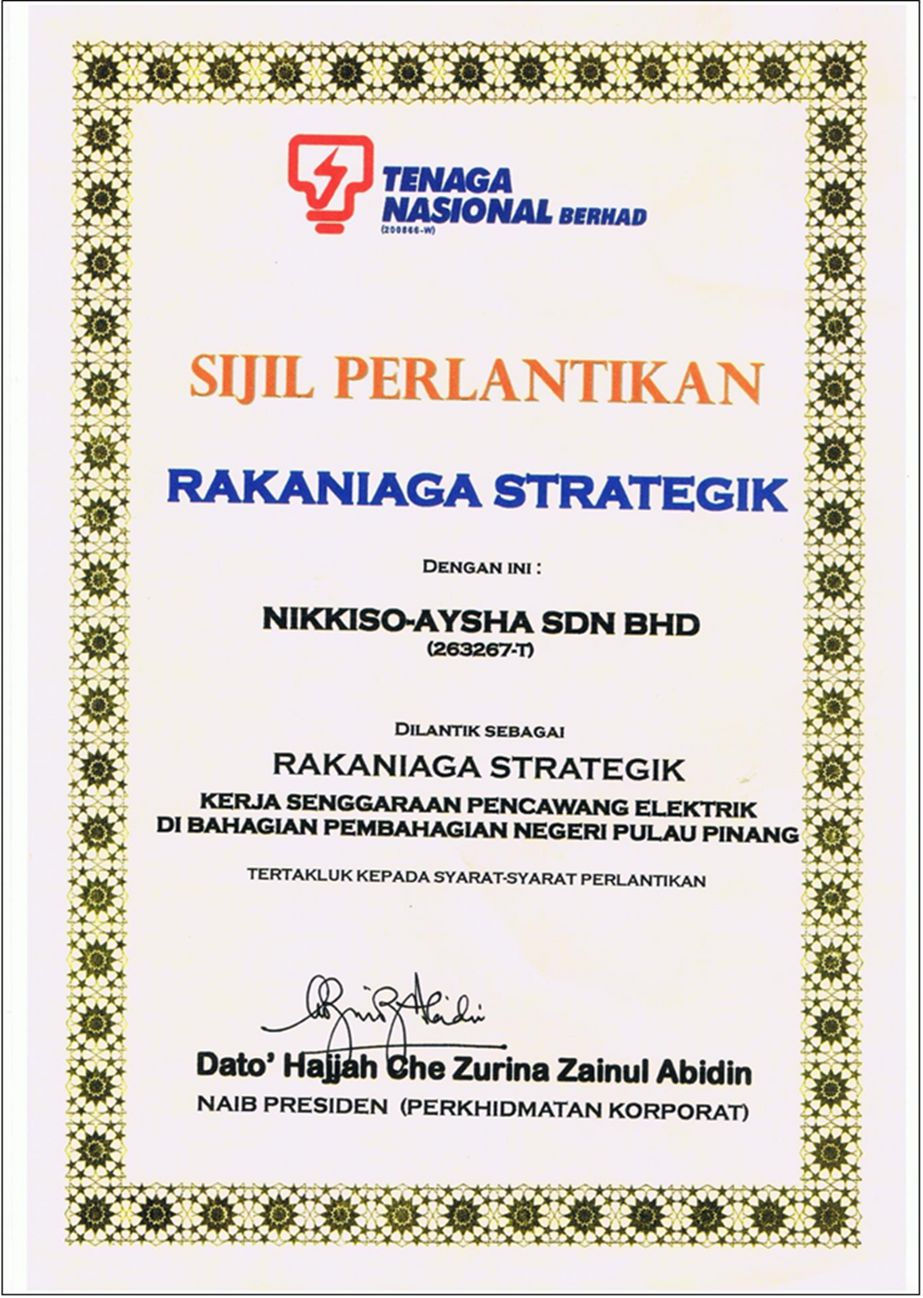
For work on or connected to the TNB network, the contractor should hold a TNB registration or appointment. The strongest signal here is TNB Rakaniaga Strategik (Strategic Business Partner) status — awarded to contractors that have passed TNB's technical, safety and quality vetting and are trusted to carry out works on TNB's system. Ask whether the contractor is directly appointed, and for which categories of work.
3. CIDB and MOF registration
Beyond electrical licensing, verify the contractor's construction and procurement credentials:
- CIDB (Construction Industry Development Board) — required for construction-related works, with grades and specialisation categories that indicate the scale and type of projects the contractor is authorised to undertake.
- Ministry of Finance (MOF) registration — needed to bid for and deliver government and government-linked projects.
4. Board of Engineers Malaysia (BEM) registration
Where your project involves engineering design, calculations or professional sign-off, the responsible engineer should be registered with the Board of Engineers Malaysia (BEM). This ensures that design decisions are made and endorsed by a person who is legally accountable for them.
Why it matters: Registrations are not paperwork for its own sake — they are the legal chain of responsibility. If the correct competent person is not registered and named on the job, your installation can fail inspection, be refused energisation by TNB, or leave you exposed if something goes wrong.
5. Insurance, safety record and track record
Credentials tell you a contractor is allowed to do the work; these three tell you whether they will do it well and safely.
- Insurance — ask for proof of adequate public liability and workmen's compensation cover for HV/LV work.
- Safety record — a serious contractor follows DOSH / HSE requirements, runs proper safety procedures on site, and can speak to their incident history.
- Proven track record and references — ask for a list of comparable completed projects and, ideally, references you can contact. A long, verifiable history in your region matters.
6. Test equipment and documentation
High-voltage work cannot be verified by eye. A capable contractor owns or has ready access to calibrated test equipment — insulation resistance testers, relay/secondary injection test sets, and instruments for winding resistance, ratio and cable testing. Just as important is what you get at the end: clear documentation and certification, including test reports, as-built drawings, and the certificates required for TNB energisation and handover. If a contractor cannot explain what reports you will receive, treat it as a warning sign.
Red flags to avoid
- Reluctance to show ST or TNB registration, or vague answers about the class of licence.
- No named chargeman or competent engineer assigned to your site.
- No proof of insurance or safety procedures.
- A price far below the market with no detailed scope — usually a sign of corners being cut.
- No past-project list, no references, and no calibrated test equipment.
- Unwillingness to commit to test reports and certification on completion.
Questions to ask before you hire
- Are you registered with Suruhanjaya Tenaga, and for which voltage class?
- Who is the chargeman or competent engineer who will be responsible on site?
- Are you a registered TNB contractor or Rakaniaga Strategik partner?
- Can you show CIDB, MOF and (where relevant) BEM registration?
- What insurance and safety procedures do you carry?
- Can you share comparable projects and references in my area?
- What test reports and certification will I receive at handover?
What "good" looks like: NIKKISO-AYSHA as an example
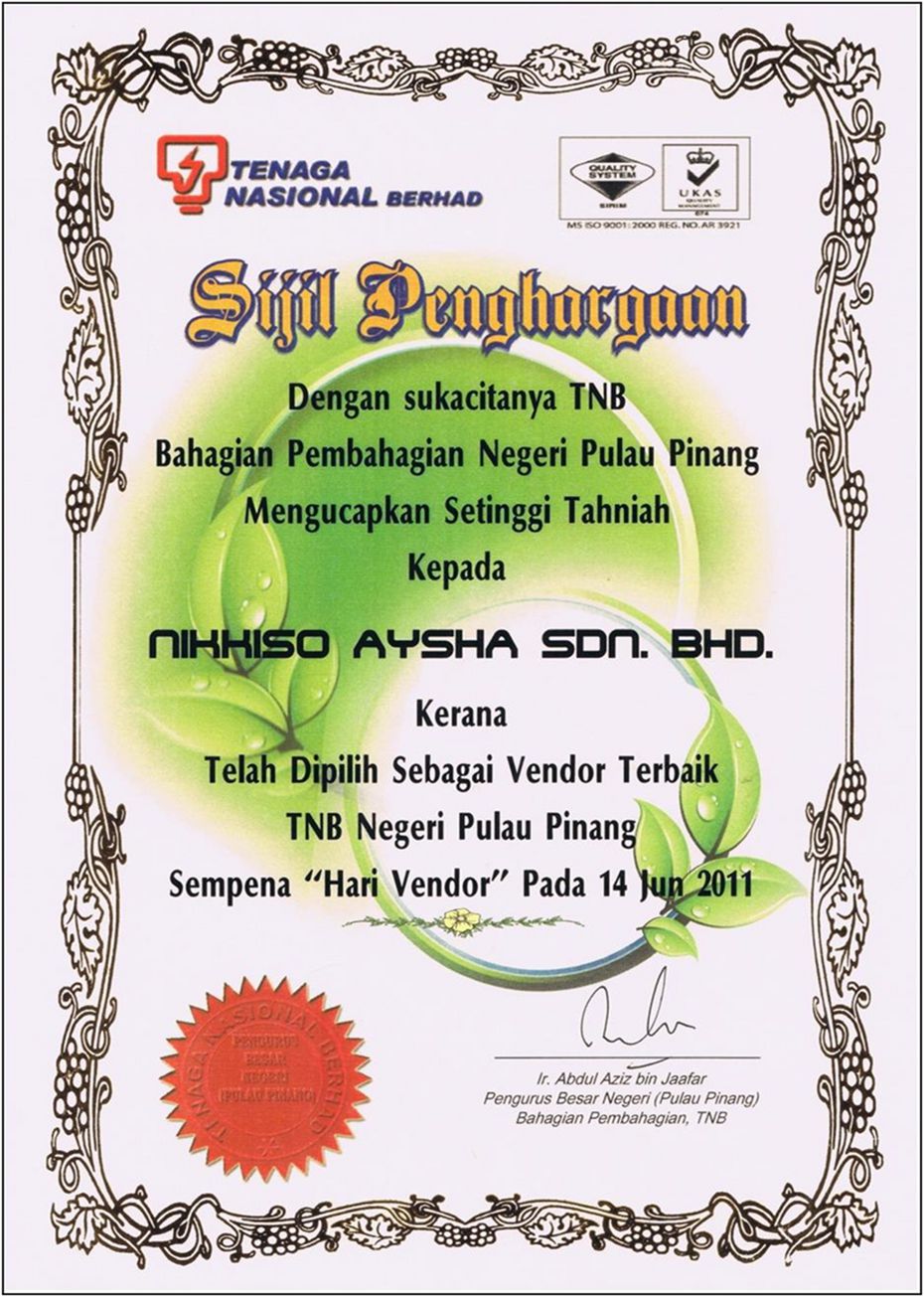
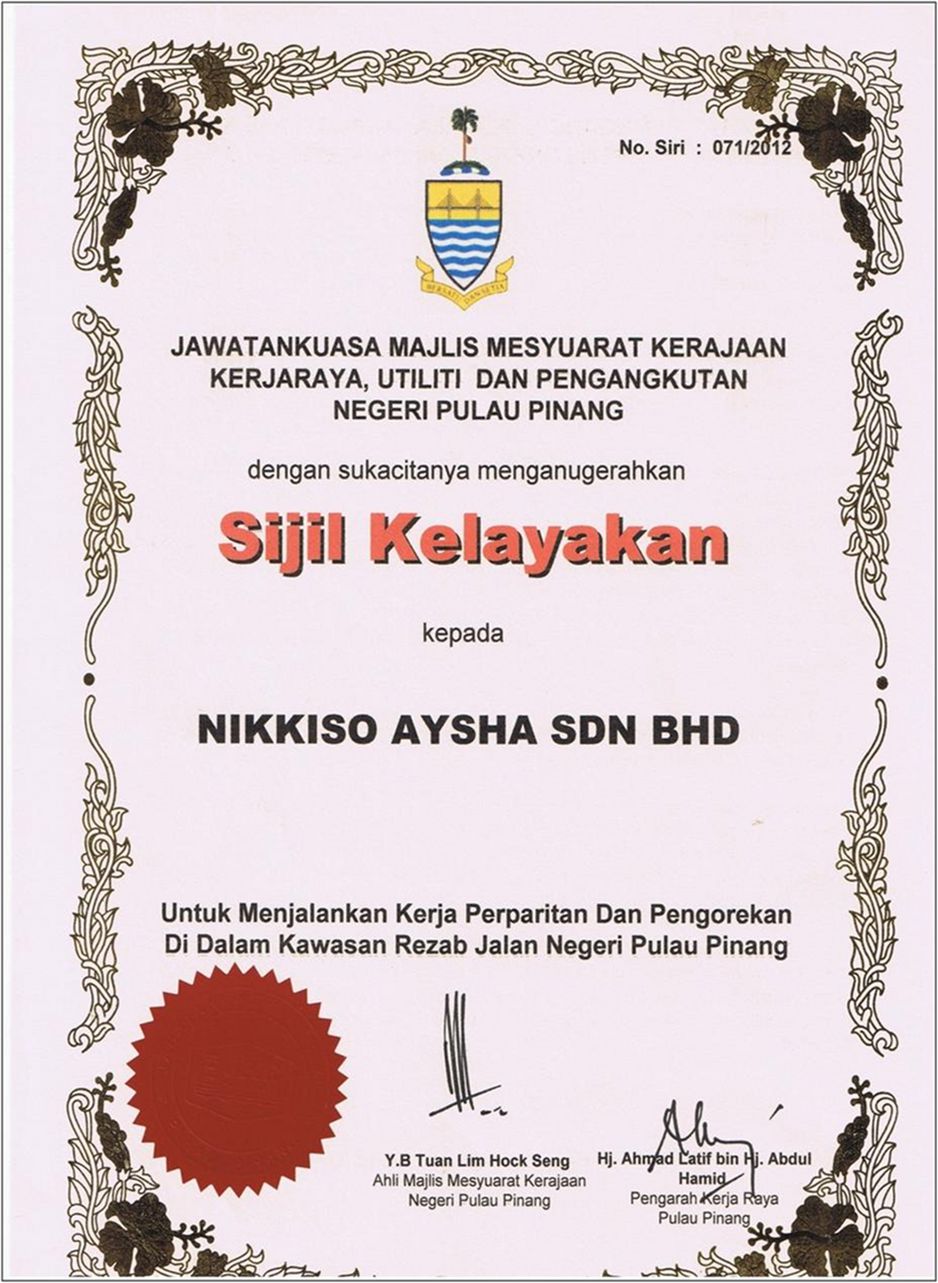
To make this concrete, it helps to see the checklist met in practice. NIKKISO-AYSHA SDN BHD has operated since 1993 from Pulau Pinang, with more than 30 years of HV and LV experience across northern Peninsular Malaysia. The company is a registered TNB Rakaniaga Strategik (Strategic Business Partner), was named a TNB Best Vendor in 2011, and works with ST-certified competent persons — the chargemen and engineers who make TNB-standard work possible. It is exactly the combination of ST certification, TNB appointment, a long verifiable track record and proper documentation that this guide asks you to look for.
Key takeaways
- Verify Suruhanjaya Tenaga registration and confirm the licence class and chargeman endorsement match your voltage.
- Look for TNB registration or Rakaniaga Strategik status, plus CIDB, MOF and BEM where relevant.
- Check insurance, DOSH safety record and a proven track record — not just credentials.
- Insist on calibrated test equipment and clear test reports and certification at handover.
Frequently asked questions
How do I check if an electrical contractor is licensed in Malaysia?
Ask for the contractor's Suruhanjaya Tenaga (Energy Commission) registration and confirm the class of licence matches the voltage of your work. Verify that the site team includes a registered Chargeman with the correct voltage endorsement and, for design or higher-voltage works, a Competent Engineer (Jurutera Kompeten). Registration details can be cross-checked with the Energy Commission and TNB.
What is a TNB Rakaniaga Strategik contractor?
TNB Rakaniaga Strategik (Strategic Business Partner) is a status granted by Tenaga Nasional Berhad to vetted contractors appointed to carry out works on TNB's network. It signals the contractor has met TNB's technical, safety and quality requirements. NIKKISO-AYSHA is a registered TNB Rakaniaga Strategik and was named a TNB Best Vendor in 2011.
What registrations should an HV electrical contractor in Malaysia have?
For high-voltage and TNB-related work a contractor should hold Suruhanjaya Tenaga registration with the correct competency class, TNB registration or appointment, CIDB registration, MOF registration for government work, and BEM registration where engineering design is involved — plus adequate insurance and a clean DOSH safety record.
What are the red flags when hiring an electrical contractor?
Watch for unwillingness to show ST or TNB registration, no named chargeman or competent engineer on site, no proof of insurance, prices far below the market with no scope detail, no references or past-project list, no calibrated test equipment, and reluctance to provide test reports or certification on completion.