A substation (pencawang) is the heart of any power distribution network. It steps voltage up or down, distributes power to feeders, and protects the network from faults. When NIKKISO-AYSHA installs or upgrades a substation, the final — and most critical — phase is testing and commissioning: proving that every relay, transformer, cable and switch will do its job under both normal and fault conditions.
What is substation testing and commissioning?
Substation testing and commissioning is the structured process of verifying that all equipment is installed correctly, wired correctly, and will operate safely before energisation. In Malaysia this work follows Tenaga Nasional Berhad (TNB) technical specifications and is carried out by competent persons registered with Suruhanjaya Tenaga (the Energy Commission).
The work is broadly divided into two categories: primary tests (the main power equipment) and secondary tests (the protection and control systems). Getting both right is what allows an engineer to confidently sign off and energise the substation.
Primary tests: proving the power equipment
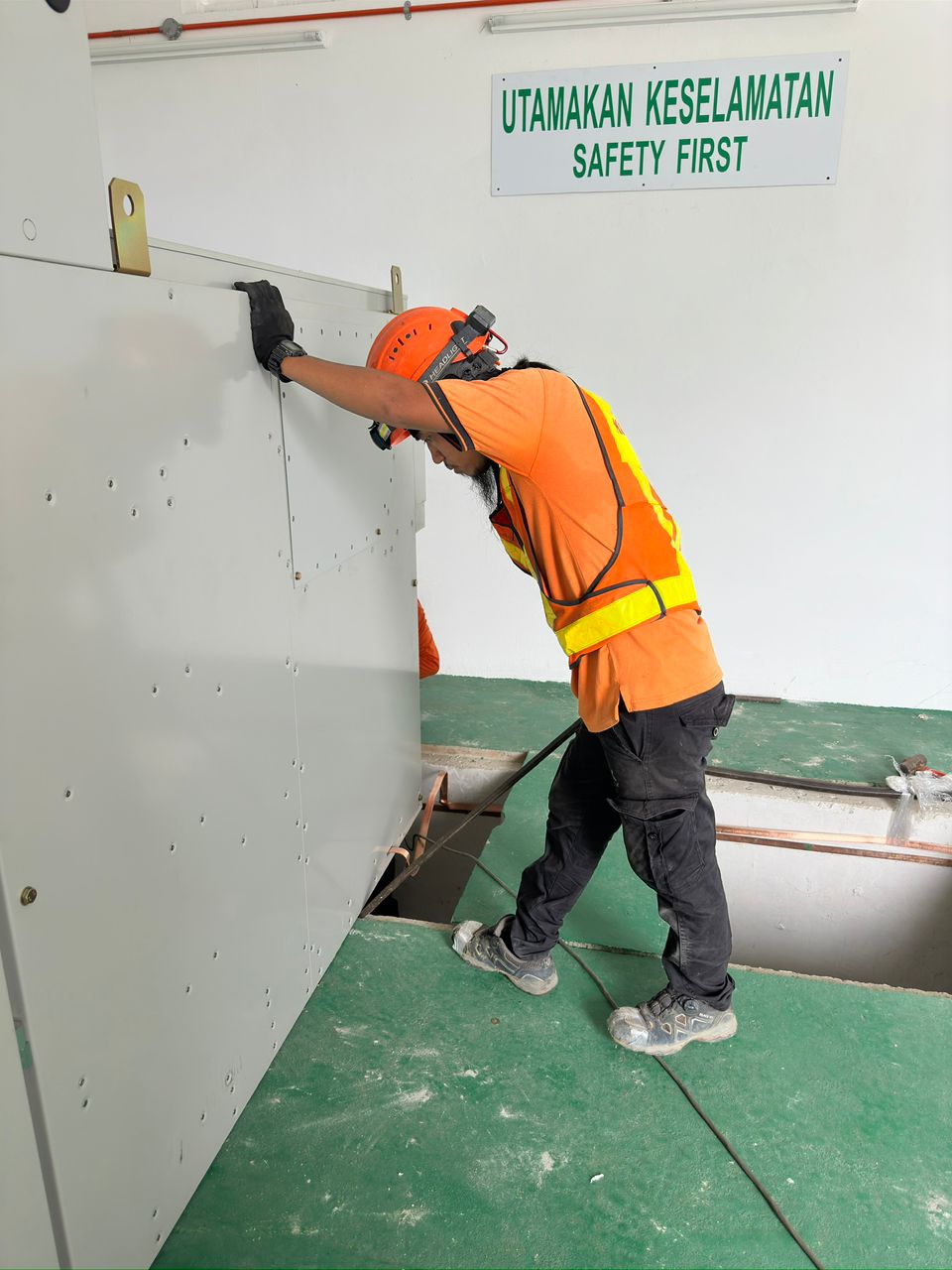
Primary testing focuses on the high-current path that actually carries power. For an 11kV or 33kV substation, our engineers typically test:
- Switchgear & Ring Main Units (RMU) — insulation resistance, contact resistance and operation checks.
- Compact Sub Units (CSU) and Feeder Pillars — busbar continuity and phasing.
- LV Boards — insulation, earthing and breaker operation.
- HV and LV cables — insulation resistance and, where required, VLF or high-voltage pressure testing.
- 11kV / 33kV transformers — winding resistance, turns ratio, insulation resistance, and oil dielectric testing.
Secondary tests: proving the protection
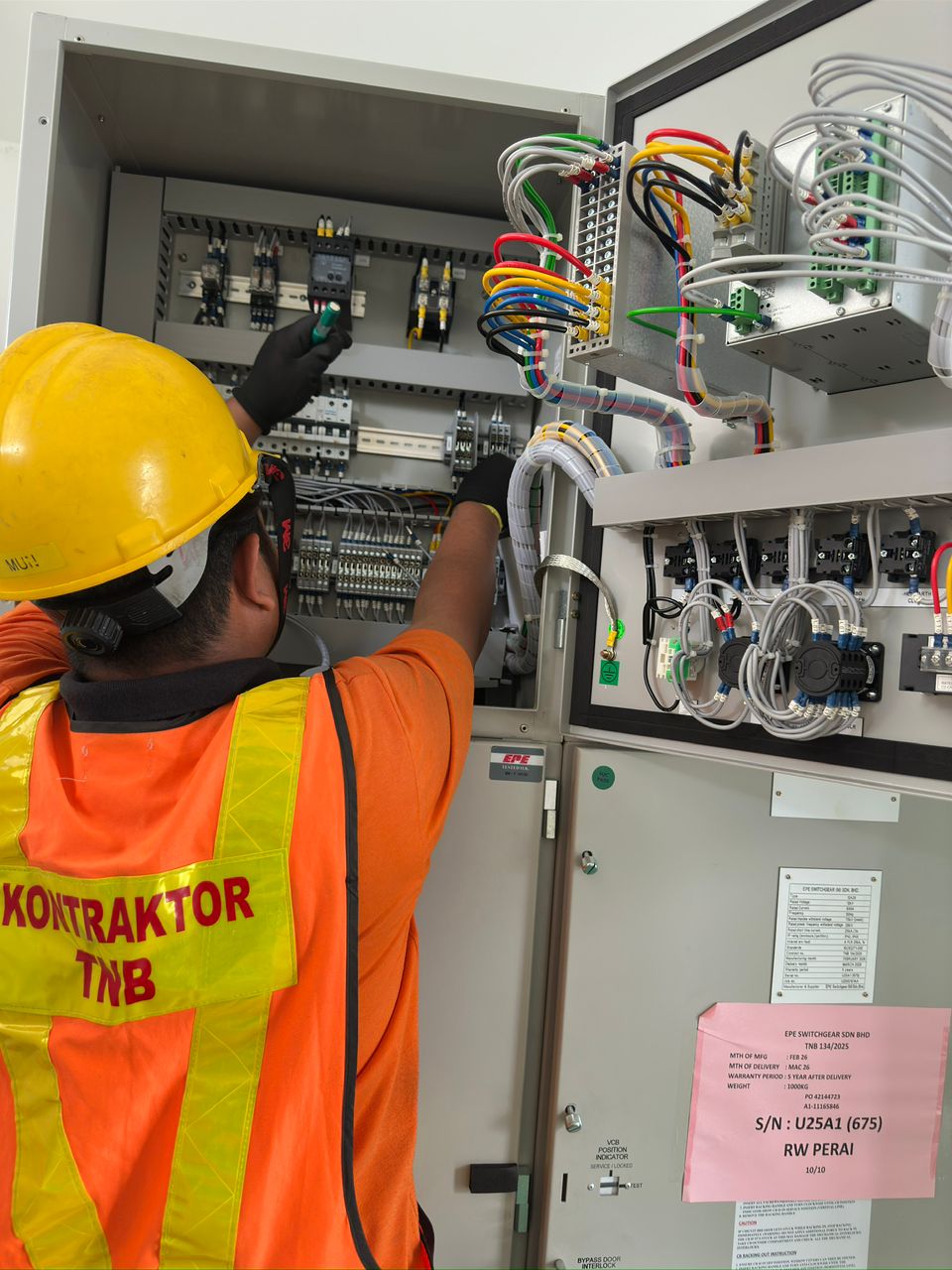
Secondary testing verifies the "brain" of the substation — the protection relays and control circuits that detect faults and trip breakers within milliseconds. This includes:
- HV and LV relay testing — injecting test currents to confirm each relay picks up and trips at the correct settings.
- Current transformer (CT) and voltage transformer (VT) verification — ratio, polarity and burden.
- Tripping and interlock logic — confirming the right breaker opens for the right fault.
- DC supply and battery checks — ensuring protection remains powered during an outage.
Why it matters: A single mis-set relay or reversed CT polarity can leave an entire feeder unprotected. Thorough secondary testing is the difference between a fault being cleared in 100 milliseconds and a fault escalating into equipment damage or fire.
The commissioning sequence, step by step
- Visual & mechanical inspection — check installation against drawings, torque of connections, and earthing.
- Primary equipment tests — transformers, switchgear, cables.
- Secondary/protection tests — relays, CTs, VTs, tripping.
- Functional & interlock checks — SCADA, alarms and control logic.
- Energisation & on-load checks — phasing, load transfer and final verification.
- Documentation & handover — test reports, as-built drawings and certification.


Why use a licensed TNB contractor?
Substation commissioning is not a job for a general electrician. It requires calibrated test equipment, deep knowledge of protection schemes, and legally, competent persons registered with Suruhanjaya Tenaga. As a TNB Rakaniaga Strategik (Strategic Business Partner), NIKKISO-AYSHA has commissioned hundreds of 11kV and 33kV substations across Pulau Pinang, Kedah, Perak and beyond, backed by 30+ years of experience.
Key takeaways
- Testing and commissioning proves a substation is safe before it is energised.
- Primary tests verify power equipment; secondary tests verify protection and control.
- Relay, CT/VT and tripping verification is where most hidden faults are caught.
- In Malaysia the work must be done by ST-registered competent persons.
Frequently asked questions
What is the difference between primary and secondary substation tests?
Primary tests verify the main power equipment — switchgear, RMUs, feeder pillars, LV boards, HV/LV cables and transformers. Secondary tests verify the protection and control side, including HV/LV relays, CTs, VTs and tripping logic.
How long does substation commissioning take?
A typical 11kV distribution substation takes 2–5 working days. Larger 33kV PMU substations with multiple transformers and protection schemes may take one to two weeks.
Who is qualified to commission a substation in Malaysia?
Only competent persons registered with Suruhanjaya Tenaga — licensed Chargemen and Competent Engineers. NIKKISO-AYSHA holds the required ST competency certifications for 11kV and 33kV works.