Most attention in power engineering goes to the high-voltage side — the 11kV switchgear, transformers and protection relays inside a substation. But for the end user, the part that matters most is what happens after the transformer, on the low-voltage side. This is the network NIKKISO-AYSHA builds and maintains every day across Pulau Pinang and northern Malaysia, and it is what physically delivers usable power to homes, shops, factories and streetlights.
From 11kV to 415V: the journey of power
Inside a distribution substation (pencawang), an 11kV distribution transformer steps the medium-voltage supply down to a low voltage. In Malaysia this is 415V between phases and 240V between any phase and neutral — a three-phase, four-wire system. From the transformer, power follows a clear sequence before it reaches a consumer:
- LV board — the transformer's low-voltage output feeds an LV distribution board inside the substation.
- Outgoing feeders — the board splits the supply into several fused outgoing circuits, each running out into the surrounding area.
- Feeder pillars — street cabinets that receive an outgoing feeder and sub-divide it into smaller local circuits.
- Service cables — the final cable runs from a feeder pillar (or directly from the board) to each building.
- The meter — where TNB measures consumption before the supply enters the consumer's own installation.
Every stage adds a point of protection and a point where the network can be divided, isolated for maintenance, or extended to new customers without disturbing the rest of the supply.

What is a feeder pillar and what does it do?
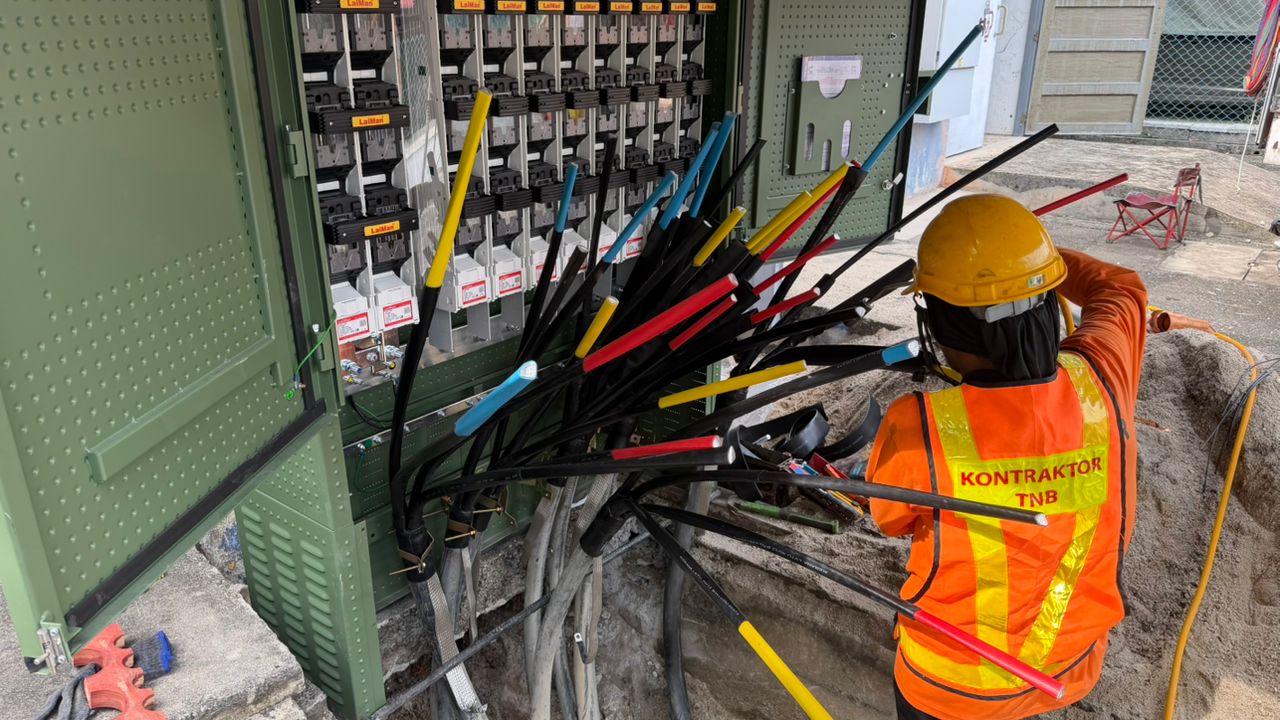
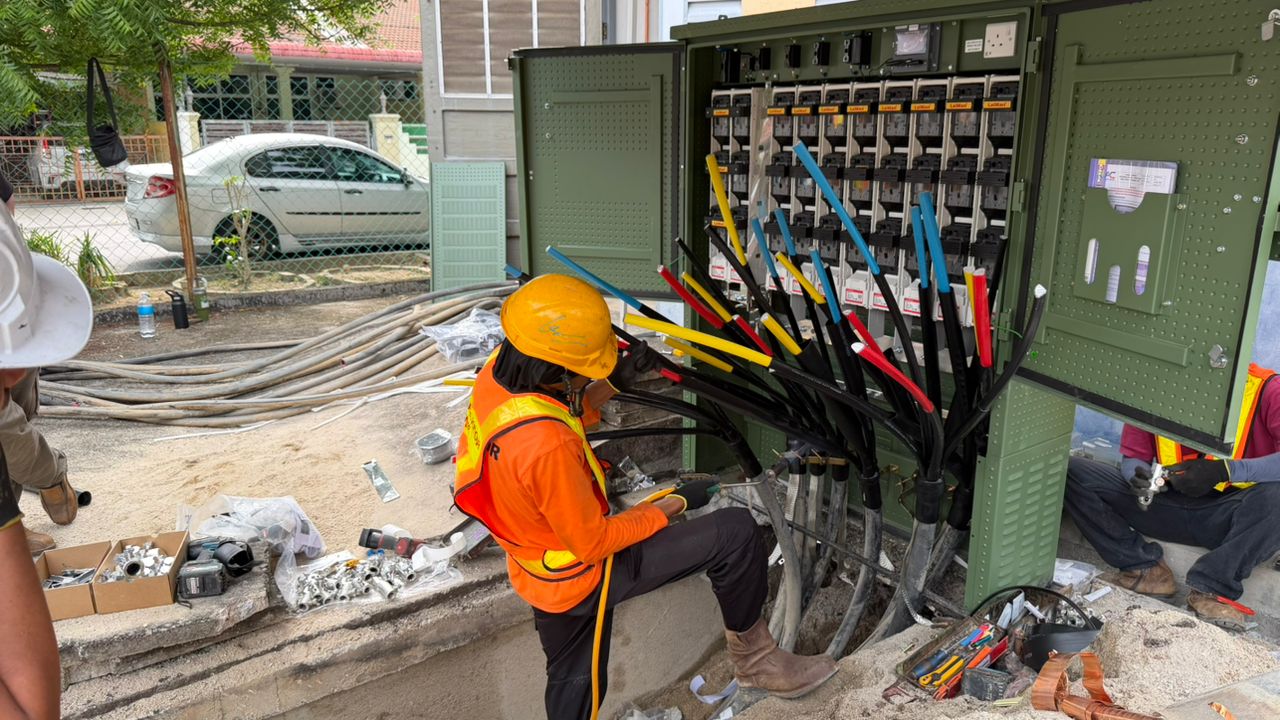
A feeder pillar is the weatherproof cabinet you often see standing at the roadside near housing areas, commercial lots and along streets. Its job is simple but essential: it takes one incoming LV cable from the substation and splits it into several protected outgoing feeders, each serving a group of nearby buildings, streetlights or other loads.
Think of it as a distribution hub. Rather than running a separate long cable back to the substation for every building, the network runs one larger cable to a feeder pillar, then fans out to consumers from there. This keeps cable runs shorter, reduces losses, and gives engineers a convenient, accessible point to isolate a fault, add a new supply, or take readings — all without switching off an entire neighbourhood.
Inside a typical feeder pillar you will find an incoming section, a common busbar, and a row of fuse ways or links for the outgoing circuits. Each outgoing feeder is individually fused, so a fault on one street does not drag down the others.
How a feeder pillar is installed
Installing a feeder pillar correctly is what separates a network that runs quietly for decades from one that suffers repeated faults. The main steps our teams follow are:
- Foundation and plinth — a concrete plinth is cast to raise the pillar above ground level, keeping the internals clear of surface water and providing a stable, level base.
- Cable entry and termination — incoming and outgoing LV cables are drawn through ducts, glanded, and terminated onto the busbar using lugs and, where jointing is required, heat-shrink or cold-shrink techniques.
- Fuses and links — correctly rated fuses are fitted to each outgoing way to match the cable and load it protects.
- Earthing — the enclosure and neutral are bonded to an earth electrode, giving fault current a safe path and allowing protection to operate.
- Final checks — insulation resistance, phase identification and tightness of every connection are verified before the pillar is energised.
Why it matters: A loose or under-torqued LV termination is one of the most common causes of overheating and burnt-out feeder pillars. A connection that looks fine but is a fraction under specification can run hot for months before it finally fails — which is why every lug is torqued and checked before energisation.
Safety and IP-rated enclosures
Feeder pillars live outdoors in Malaysia's heat, humidity and monsoon rain, so the enclosure itself is a safety component. Cabinets are specified to an appropriate IP (Ingress Protection) rating to keep dust and water away from live parts, and are lockable so that only authorised personnel can open them. Ventilation is designed to release heat without letting rain in, and internal barriers keep the live busbar shrouded so maintenance can be carried out safely.
Load balancing across phases
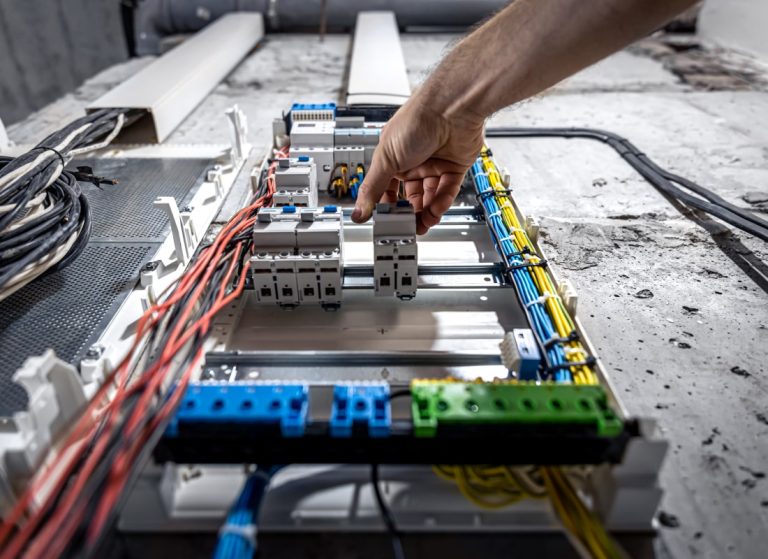
Because the LV network is three-phase, how loads are shared between the phases matters. If most of the buildings on a feeder pillar happen to be connected to the same phase, that phase carries far more current than the other two. The result is voltage imbalance, extra losses in the neutral, hotter cables, and in the worst cases nuisance tripping or flickering supply for customers.
Good practice is to spread new connections evenly across the three phases so each carries a similar current. During installation and later maintenance, our engineers take phase current readings at the feeder pillar and, where necessary, re-arrange connections to keep the network balanced and efficient.
Maintenance of feeder pillars and LV networks
An LV network is not "fit and forget". Feeder pillars benefit from periodic inspection: thermographic (infra-red) checks to catch hot joints before they fail, visual checks of the enclosure and seals, confirmation of fuse ratings, tightening of terminations, and testing of the earth connection. Catching a warm termination early is far cheaper — and far safer — than replacing a burnt-out pillar and restoring supply to affected customers after an outage.
Key takeaways
- LV distribution carries power from the substation transformer at 415V/240V to the consumer's meter.
- The path runs from the LV board to outgoing feeders, then feeder pillars, service cables and finally the meter.
- A feeder pillar splits one incoming LV cable into several individually fused outgoing circuits.
- Correct plinth, termination, fusing and earthing — plus phase balancing and routine maintenance — keep the network safe and reliable.
Frequently asked questions
What is a feeder pillar?
A feeder pillar is a weatherproof street cabinet that receives an incoming LV cable from the substation and splits it into several fused outgoing feeders supplying nearby buildings, streetlights or other loads. It is both a distribution point and a protection point between the substation and the consumer.
What is the difference between a feeder pillar and an LV board?
An LV board sits inside the substation on the low-voltage side of the transformer and first distributes the 415V supply into main outgoing feeders. A feeder pillar is a smaller cabinet further out in the network that sub-divides that supply into local circuits closer to consumers.
Why is load balancing across phases important in LV distribution?
A 415V supply has three phases and a neutral. Spreading loads unevenly makes one phase carry more current than the others, overheating cables, wasting energy in the neutral and causing voltage imbalance. Balancing loads across phases keeps the network efficient and within safe limits.